The state and federal offices that fund, inspect and help Utah farms and ranches, and the steps a producer takes on water, loans, land, selling and workers. Each step links to the office that handles it.
Average producer age56.6More than one in three producers is 65 or older.
Farm is a second job69%Share of producers whose main job is off the farm.
Source: USDA 2022 Census of Agriculture; Kem C. Gardner Policy Institute.
About
Who regulates Utah farms and ranches
LegislativeExecutiveJudicial
Agriculture and FoodFarm loans, water grants, livestock and food inspections, and the Utah's Own program. Source
Water RightsThe State Engineer decides who may divert and use water. Source
USDAFarm numbers, conservation cost-share and federal farm programs through local service centers. Source
Why it matters
What the numbers show
Fewer farmsUtah had 17,386 farms in 2022, 6% fewer than in 2017, on 10.5 million acres. Source
An older workforceThe average producer is 56.6, and 35% are 65 or older, so many farms will change hands soon. Source
A hard 2026Drought, wildfire and animal disease led the state to cut its farm loan rates to 0% for a year. Source
Farms and ranches
Conservation help, farm loans and food permits
1
UtahLocal help
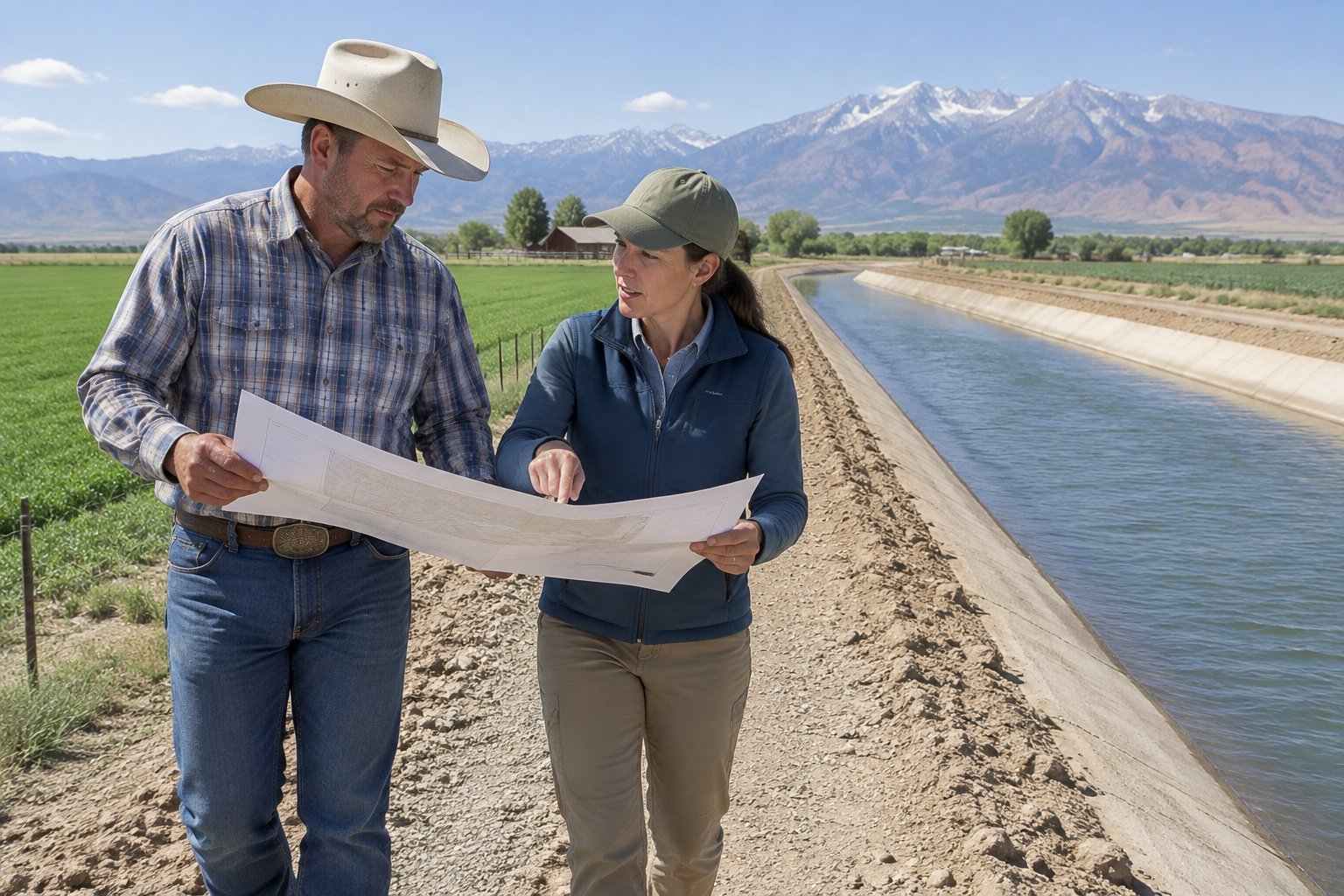
Call your conservation districtUtah's 38 conservation districts help landowners with erosion, water quality and weeds and connect them with state and federal money. The coordinator for Utah County's zone: 435-749-0853.Go to the source →
2
FederalFree
Get a farm numberEQIP needs a farm number from USDA's Farm Service Agency, usually in the same building as the conservation office.Go to the source →
3
Utah0% interest
Pay 0% on state farm loansEvery active Agriculture and Food loan is at 0% interest from Nov. 1, 2026, to Oct. 31, 2027, and borrowers may put off a payment for up to 12 months.Go to the source →
Value of the hay crop$420M2025, vs. $404M in 2024 · ▲ +3.8%Utah's largest crop, all hay.
Milk produced2.25B lb2025, vs. 2.12B lb in 2024 · ▲ +6.4%Pounds of milk from Utah dairies.
Value of the hay cropAll hay, Utah's largest crop
2024$404M
2025$420M
▲ +3.8%
Alfalfa hay priceDollars a ton, season average
2024$167
2025$176
▲ +5.4%
Hay producedMillions of tons
20242.62M
20252.54M
▼ -3.1%
Milk producedLargest increaseBillions of pounds
20242.12B
20252.25B
▲ +6.4%
Value of milkWhat dairies were paid
2024$475M
2025$465M
▼ -2.2%
Cattle and calvesOn Utah farms and ranches, Jan. 1
Jan. 1, 2025740,000
Jan. 1, 2026760,000
▲ +2.7%
Tart cherriesMillions of pounds used
202443.6M
202531.7M
▼ -27.3%
Farmland valueLand and buildings, dollars an acre
2024$3,300
2025$3,500
▲ +6.1%
Farm jobsAt crop and livestock employers, yearly average
20244,918
20255,073
▲ +3.2%
Farm payAverage a year per job
2024$41,423
2025$43,571
▲ +5.2%
What's behind these changes ▾
Hay. Farmers harvested 40,000 fewer acres of alfalfa, so less hay was produced, but the price rose from $167 to $176 a ton, so the crop was worth more. (USDA NASS)
Milk. Dairies produced 6.4% more milk, but were paid less per pound: about $20.60 per hundred pounds in 2025, down from $22.40. (Our calculation from USDA NASS value and pounds)
Cattle. Utah had 20,000 more cattle and calves on Jan. 1, 2026, while the U.S. herd shrank slightly, to 86.2 million head. (USDA Cattle report)
Farmland. Utah cropland rose 9.7% to $5,790 an acre, and irrigated cropland 9.6% to $9,810. (USDA Land Values 2025 Summary)
Tart cherries. The 2025 crop came to 31.7 million pounds, down from 43.6 million; growers got more per pound. The 2026 crop was hit by an April freeze (see the news below). (USDA NASS)
Jobs and pay: Bureau of Labor Statistics, Quarterly Census of Employment and Wages, crop and animal production (NAICS 111 and 112), private employers covered by unemployment insurance. It leaves out family workers and self-employed farmers, so it counts far fewer people than work on farms.